


ACT


August 31, 2026
Most fireproof safe marketing either gives you no measurement reference or gives you two numbers as a reference: a temperature and a time. What it doesn’t tell you is that the things sitting inside your safe don’t all fail at the same point. A safe rated to protect paper can leave a hard drive unreadable well before the rating period ends, and a safe that protects your documents perfectly might do nothing for the passport sitting next to them. As the people who actually build and certify these safes, we think it’s worth knowing what’s really inside that rating before you assume everything in your safe is equally protected.
This guide breaks down the approximate destruction point of the things people most commonly store in a safe, and what practical steps can improve protection for each of them.
As a very important piece of context, it should be understood that all forms of fire testing are in controlled environments where the external temperature that is exposed to the unit is escalated very rapidly and concentrated on the unit itself for the prescribed period. This is very different to the way you would expect a common house or structure fire to occur in the real world. Unless the safe is stored in a location where the fire originates, you wouldn’t expect it to be affected by the full level of the heat for the duration of the fire burning. Fires would likely spread throughout a facility, and the temperature would gradually increase as the concentration of the heat moves from area to area. With this in mind, it is generally understood that tested and certified fire products well and truly outperform their tested statistics in the real world, given that their exposure to the heat is considerably lower or varying in intensity throughout the duration of the fire.
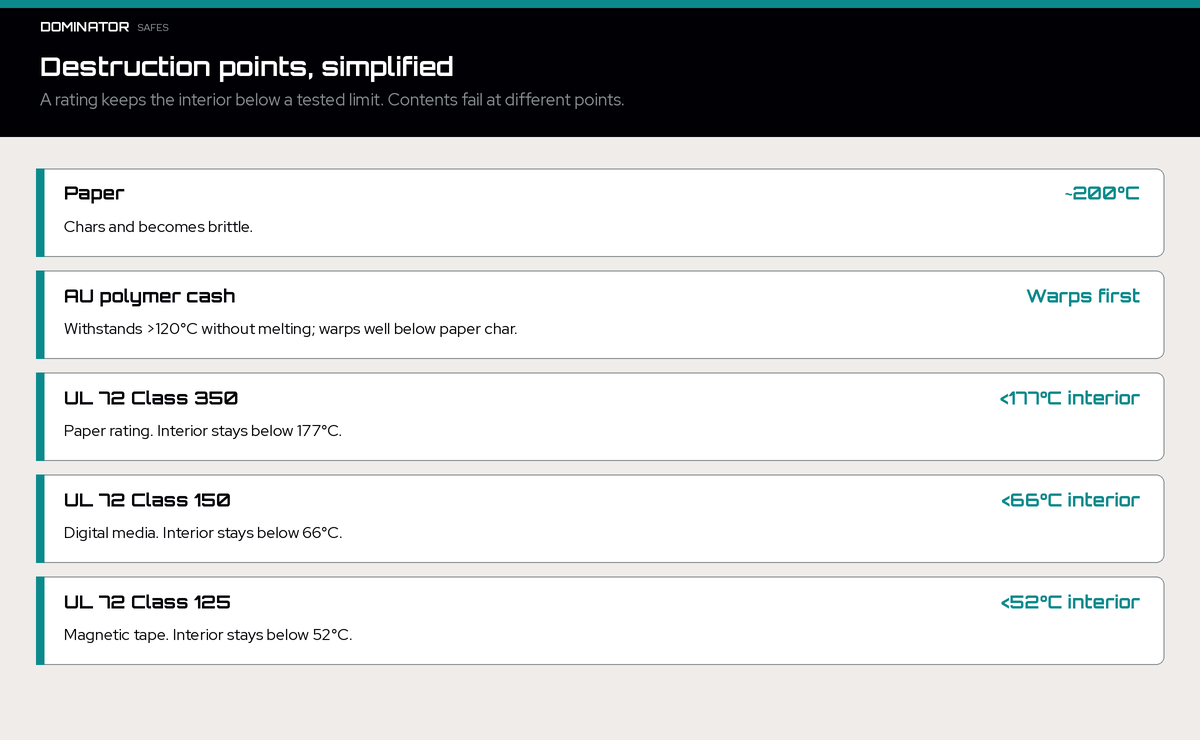
Destruction point comparison table
| Item | Material | Approximate Threshold | What Happens |
|---|---|---|---|
| Cash (paper currencies, historical/other markets) | Cellulose paper | Around 200°C | Chars and becomes brittle, eventually combusts |
| Cash (Australian currency, since 1988) | Polymer (BOPP plastic film) | Withstands heat in excess of 120°C without melting, but warps well before that under direct heat exposure | Softens and distorts before it burns |
| Important documents (wills, deeds, certificates, contracts) | Paper | Around 200°C | Chars, becomes brittle and illegible |
| Passports | Paper with embedded polymer/polycarbonate data page and RFID chip | Not independently established; official passport authorities confirm heat can invalidate a passport well before the point of combustion | Pages, data page and embedded chip are each vulnerable at different, generally lower thresholds than plain paper |
| Magnetic tape (LTO / backup tapes) | Mylar backing with magnetic coating | UL 72 sets its most stringent media protection tier, Class 125, specifically for tape and diskettes, requiring safe interiors to stay below 52°C, a tighter margin than the Class 150 (66°C) standard for general digital media | Reflects industry recognition that tape is the most heat sensitive common digital format, requiring the tightest protection margin of any UL media rating |
| Photographic prints and negatives | Gelatin emulsion on paper or plastic base | Fails at relatively low, moderate heat | Emulsion layer degrades and image is destroyed before the base material chars |
| USB drives, SD cards, SSDs | NAND flash memory | Sits between magnetic tape and hard drives in heat tolerance | Data corruption typically precedes physical destruction of the drive |
| Hard disk drives (HDD) | Magnetic platters, mechanical components | The most heat tolerant common digital storage medium; data loss becomes permanent once platters exceed their Curie point, the temperature at which magnetic material loses its magnetic properties entirely | Mechanical components (bearings, read/write heads) tend to fail before the platters reach the Curie point and lose data irrecoverably |
| Laptops and tablets | Mixed plastics, lithium-ion batteries, electronic components | According to UL Research Institutes, thermal runaway begins once a lithium-ion cell’s temperature rises faster than 20°C per minute and exceeds 100°C, with peak temperatures often exceeding 300°C | Battery swelling, venting, smoke and fire, well before the device’s other components are destroyed |
| Jewellery (gold, silver, platinum) | Precious metals | Gold approx. 1,064°C, silver approx. 962°C | Metal itself is highly heat resistant; damage more likely from smoke, soot or surrounding debris |
| Jewellery (gemstones, pearls, enamel settings) | Various | No single universal threshold; GIA confirms pearls specifically are vulnerable to heat well below the temperatures that damage a metal setting | Pearls can burn, discolour, split or crack under high heat; other gemstones vary widely depending on composition and any prior treatments |
| Firearms | Steel, various polymer components (grips, stocks) | Steel has a very high melting point; polymer components fail much sooner | Polymer parts can warp or melt at moderate temperatures even when the metal action survives |
| Precious metal bullion | Gold, silver, platinum bars/coins | Same as jewellery metals above | Highly heat resistant in bar or coin form; risk is mainly to any accompanying paperwork or certification |
Two items are worth flagging separately for how they actually fail. Passports combine paper, a plastic data page, and an embedded RFID chip, so their destruction point isn’t a single clean number, it’s whichever component fails first, and passport authorities are clear that heat damage well short of combustion can already make a passport unusable. Digital storage media don’t all fail at the same point either: magnetic tape is consistently the most heat sensitive format in common use, hard drives are the most tolerant, and flash-based media like SSDs and USB drives generally sit somewhere in between. In every case, data loss tends to occur well before the device is destroyed outright, which is the gap most fireproof safe marketing glosses over entirely.
The fire safe industry already recognises this tiering and builds it into the UL 72 standard itself. UL 72, the primary US fire testing standard for safes, doesn’t use a single pass or fail threshold. It sets three separate classes depending on what’s being protected: Class 350 for paper, requiring the safe’s interior to stay below 177°C; Class 150 for general digital media like hard drives, CDs and DVDs, requiring the interior to stay below 66°C; and Class 125, the tightest tier of all, reserved specifically for magnetic tape and diskettes, requiring the interior to stay below 52°C. The gap between these three numbers isn’t arbitrary. It’s the standards body itself confirming, in the certification requirements, that paper tolerates far more heat than a hard drive, and a hard drive tolerates more than a length of magnetic tape. A safe carrying only a Class 350 paper rating was never tested against, and never certified for, either digital media tier.
Why one fire rating doesn’t cover everything in your safe
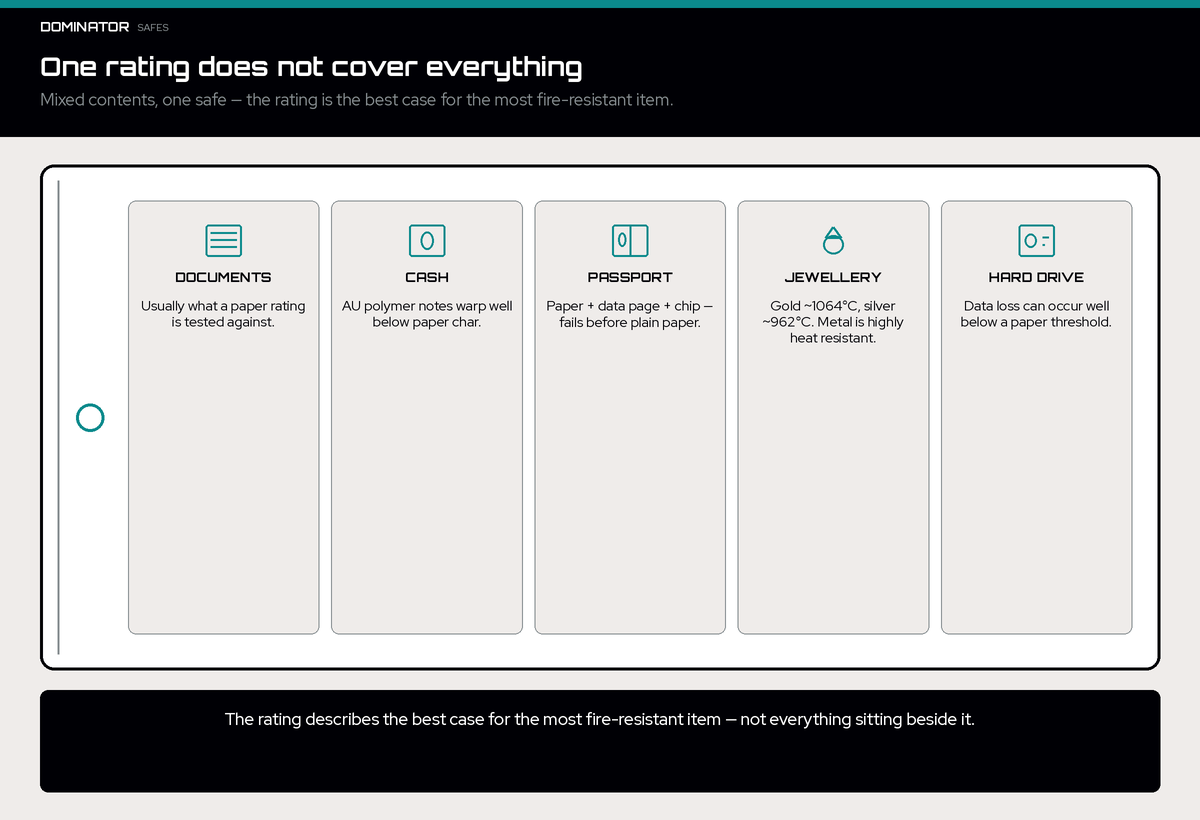
A safe’s fire rating is tested and certified against a single set of conditions, usually a specific material type (like paper), a specific temperature threshold, and a specific duration. But most safes don’t hold just one type of item. A typical home or business safe might contain cash, property documents, a passport, some jewellery, and a backup hard drive all at once, and each of those has a different destruction point.
This creates what’s effectively a weakest link problem. A safe with a strong paper fire rating protects the documents and cash inside it exactly as advertised, but if a hard drive sitting next to those documents fails at a lower temperature than the safe is rated to hold, the rating on the safe’s door doesn’t reflect what actually happened inside it during a fire. The headline rating describes the best case for the most fire-resistant item in the safe, not a guarantee for everything sitting alongside it.
This is particularly relevant for digital media, since data loss on a hard drive, SSD, or backup tape can occur well below the temperature that would damage a paper document in the same safe. A safe purchased specifically because it’s “fireproof” can still result in a ruined hard drive if the buyer didn’t check whether that fireproofing extended to data specifically or was only ever tested against paper.
The practical takeaway: don’t assume a single fire rating covers everything you’re storing. If your safe holds a mix of documents, valuables, and digital backups, the safest approach is to identify the most heat sensitive item you’re storing and make sure the safe’s rating (or a dedicated media safe within it) actually protects to that standard, not just the standard for the most heat tolerant item in the mix. In saying that some people might just accept the risk to the more sensitive items because safes are not only made for fire protection and offer varying levels of security as well. You may choose to store your digital media alongside your other sensitive items and accept that they may get damaged in the event of a fire. They remain protected from burglary or theft in the meantime and the safe will also protect the documents that are housed within the same safe. Instead of it being an unknown side effect, you can turn it into a conscious choice and a practical decision.
Layering protection: fire media chests inside a security safe
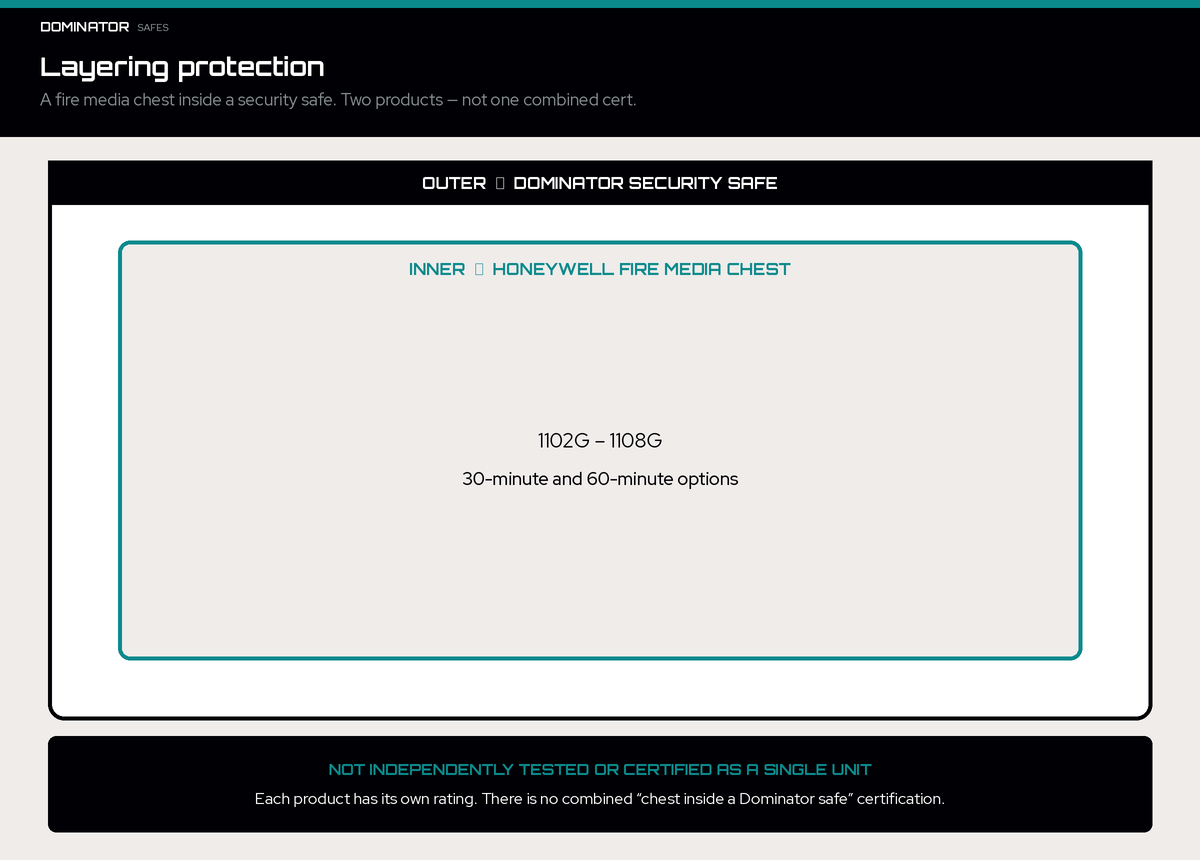
If digital data or media is part of what you’re storing, one option worth understanding is layering a dedicated fire media chest inside your security safe, rather than relying on the safe’s own fire rating alone.
Dominator Safes imports and supplies the Honeywell 1102G, 1103G, 1104G, 1106G and 1108G fire media chests, available in 30 minute and 60 minute fire rated options, purpose built for protecting documents and media rather than general contents. These chests are designed and tested as standalone units to their own specific fire rating.
How the layering logic works
Placing a fire rated media chest inside a security safe means whatever is stored in the chest is protected first by the chest’s own fire rating, and then again by the temperature buffering the outer safe provides during a fire. In principle, the internal environment the chest experiences during a fire should be milder than the external conditions the safe itself is exposed to, since the safe’s structure is absorbing and delaying heat before it ever reaches the chest inside it.
What we can’t claim, and why
This combination has not been independently tested or certified as a single unit. There’s no test report or certification body figure for “Honeywell chest inside a Dominator Safe” the way there is for the safe alone or the chest alone. The logic behind layering protection is sound, and it reflects how fire ratings generally work, but it’s an inference based on how each product performs individually, not a verified, combined performance figure. If you need a specific, certified fire rating for compliance or insurance purposes, that certification applies to the individual product tested, not the combination.
Where this fits in practice
For anyone storing genuinely irreplaceable documents, backup media, or digital storage devices, adding a fire media chest inside an existing safe is a reasonable, low cost way to add a layer of protection beyond the safe’s own rating, particularly if the safe itself is rated for paper only and the contents include media or data. It shouldn’t be treated as a substitute for choosing a safe with an appropriate rating in the first place, more a way to add extra assurance for your most sensitive contents.
Looking at fire-rated options?
See our fire-resistant safes and home safes, or find a dealer.
Other practical steps to improve fire protection
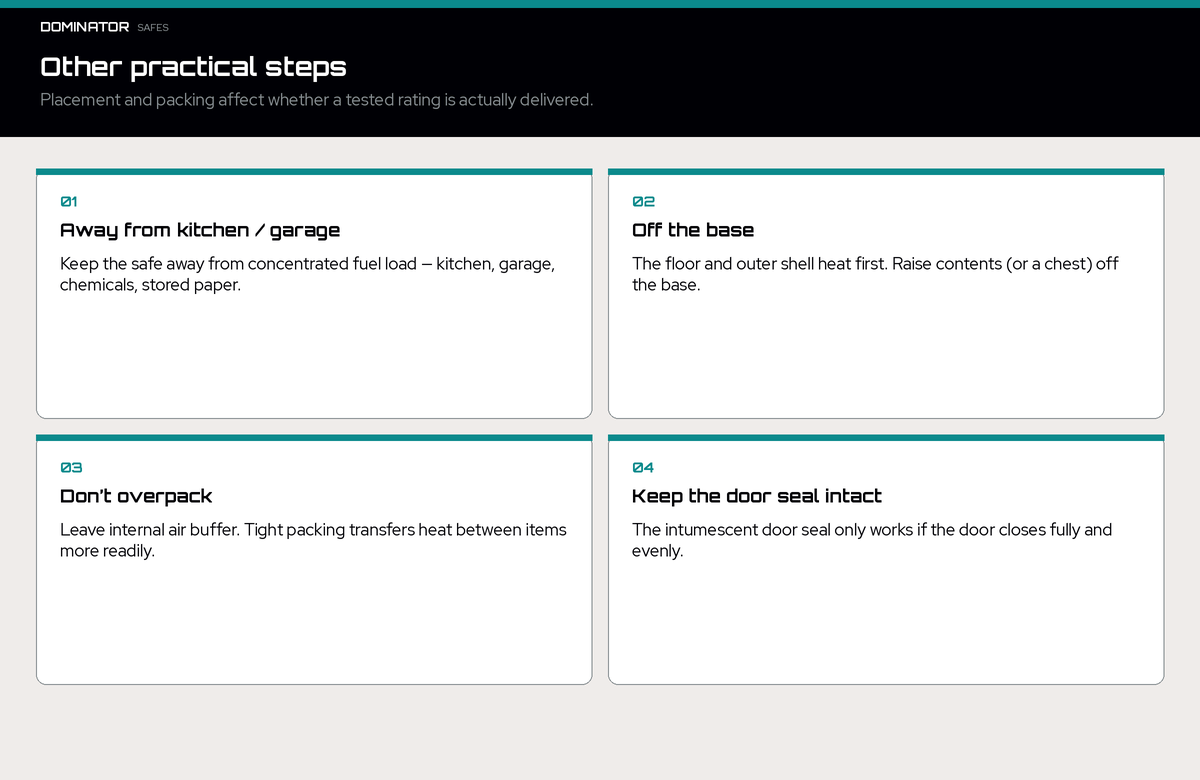
Beyond the safe’s own rating and any additional media chest, a few practical habits make a real difference to how well your safe’s protection actually performs when it matters.
Where the safe is located matters
A safe’s fire rating is tested under controlled laboratory conditions, but a real fire’s intensity and duration at any given point in a building depends heavily on what’s burning nearby. A safe positioned directly above, below, or immediately adjacent to a kitchen, garage, or any area with concentrated fuel load (fuel, chemicals, large amounts of stored paper or furniture) is likely to experience more intense and prolonged heat than the safe’s rating was tested against. Where practical, positioning a safe away from these higher fuel load areas of a building gives it a better chance of performing as rated.
Don’t let contents touch the safe’s outer walls or floor
Heat transfers into a safe through its structure, which means the areas closest to the outer shell, particularly the base, heat up faster than the centre of the interior during a fire. Items resting directly on the floor of the safe or pressed against an internal wall are exposed to higher temperatures sooner than items kept toward the centre. Raising media, documents, or a fire chest slightly off the base, even with a simple shelf or spacer, keeps them further from the areas that heat fastest.
Don’t overpack the safe
A safe stuffed to capacity has less internal air buffer, and tightly packed contents can transfer heat between each other more readily. Leaving some breathing room inside the safe, particularly around heat sensitive items like digital media, supports the buffering effect the safe is designed to provide.
Keep the door sealed and undamaged
Most fire safes rely on an intumescent seal around the door, a material that expands under heat to close any gap between the door and body and keep hot air out. Anything that prevents the door from closing fully and evenly, a bent frame, worn hinges, or items wedged in the door, can compromise this seal and reduce the safe’s real world protection well below its tested rating.
None of these steps change what a safe is certified to, but they affect whether that certification is actually realised during a real fire, rather than undermined by placement or handling issues that have nothing to do with the manufacturer’s testing.
Choosing the right fire protection for what you store
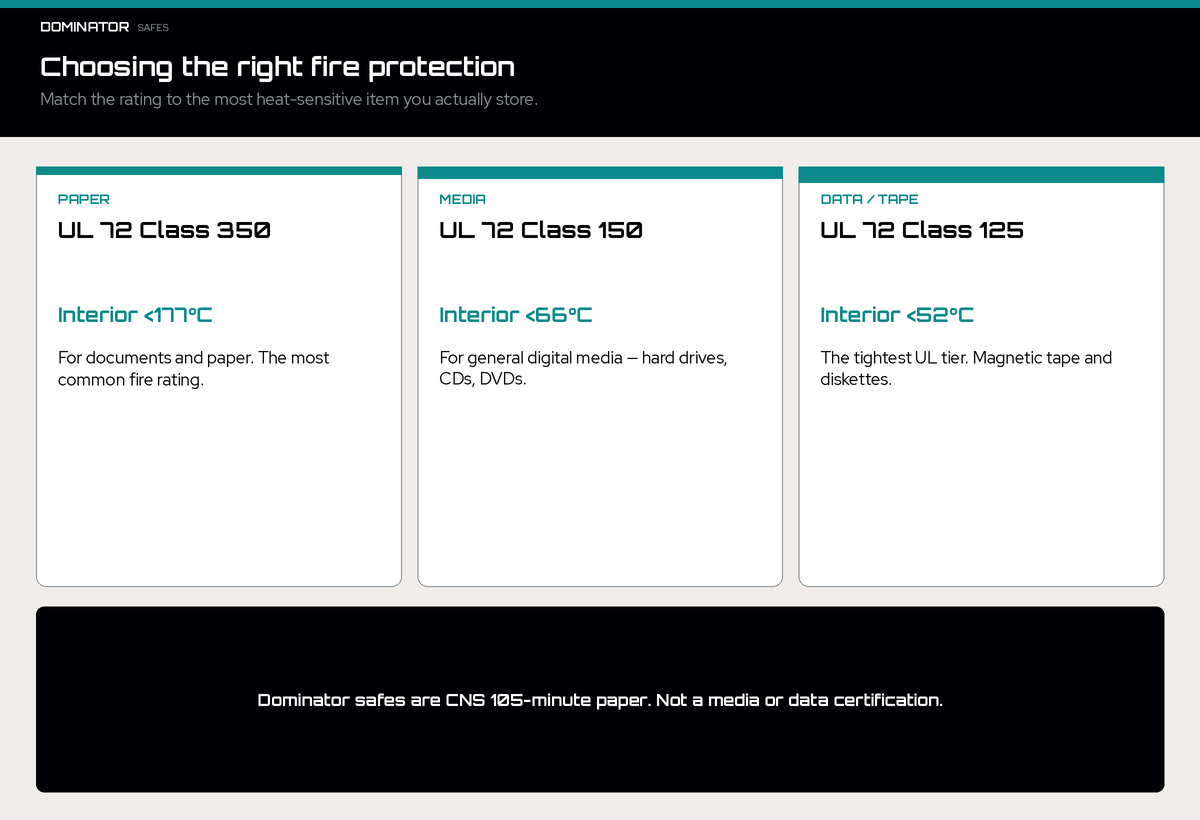
The rest of this article has made one point from a few different angles: a fire rating protects what it was tested against, and nothing more. Before buying a safe, or deciding what goes inside one you already own, it’s worth working through a short, practical process rather than assuming “fireproof” covers everything.
Start with what you’re actually storing. Cash, documents, jewellery, passports, and digital media all have different destruction points, and mixing them in one safe means the safe needs to protect to the standard of the most heat sensitive item in that mix, not the most heat tolerant.
Check what the fire rating actually applies to. A rating described only as “fireproof” or given only as a time and a temperature isn’t enough information. Ask specifically whether the rating is for paper, media, or data, since these are meaningfully different standards, and a paper rating gives no guarantee for a hard drive or backup device stored in the same space.
Treat digital media and passports as their own category. Both fail at lower temperatures than plain paper, and both are increasingly common contents in a home or business safe. If either applies to you, a dedicated media rated chest, whether standalone or layered inside a security safe, is worth considering rather than assuming a general purpose safe’s rating extends to cover them.
Don’t overlook the practical side. Where the safe is positioned in the building, how it’s packed, and whether the door seal is in good condition all affect whether a safe’s tested rating is actually delivered during a real fire. A well rated safe placed above a garage or packed to capacity with contents pressed against its outer walls, isn’t getting the full benefit of what it was certified to do.
Getting this right isn’t complicated, it just requires treating “fireproof” as the start of a question rather than the end of one.
FAQ
What temperature destroys documents in a safe?
Paper generally chars at around 200°C, becoming brittle and eventually combusting. A safe with a genuine paper fire rating is designed to keep its interior below this threshold for the stated time period. Always check whether a safe’s fire rating specifically covers paper, rather than assuming a general fireproof claim guarantees this.
Do fireproof safes protect hard drives?
Not automatically. Hard drives and other digital media can suffer data loss at temperatures well below paper’s char point, and a safe rated only for paper offers no meaningful guarantee for a drive stored inside it. If you’re storing digital backups, look specifically for a media or data rated safe or chest.
Will a safe protect a passport in a fire?
A passport combines paper, a plastic data page, and an embedded chip, each vulnerable at different, generally lower temperatures than plain paper alone. A standard paper rated safe may not fully protect a passport in a serious fire. Storing it inside a dedicated media chest offers stronger protection.
Can I put a fire media chest inside a safe?
Yes, this is a reasonable way to add extra protection for documents and digital media. The safe’s structure buffers external heat before it reaches the chest, and the chest provides its own separate fire rating. This combination is not independently tested as a single unit, so treat it as layered protection rather than a certified combined rating.
For our distributors and partners: You’re welcome to link to this article from your own website to share this information with your customers — we’d genuinely appreciate it. Please link directly to this page rather than copying or reproducing the article text, in full or in part, on your own site. This isn’t just a preference: duplicated content can hurt search rankings for both sites, and a direct link means your customers always see the most current version if we ever update it. If you’d like a short, brand-appropriate blurb to introduce the link on your own site, get in touch at info@dominatorsafes.com.au and we’re happy to help.
Request a Quote
Request a free quote on a and one of our experts will be in touch.

Protect
Burglary or fire can be devastating. You can reduce the potential impact in your life by properly securing your most valuable possessions in a high security, fire-resistant safe.

Quality
Strict and highly detailed quality inspections are undertaken at multiple stages throughout the manufacturing process to ensure the best possible product gets delivered every time.

Secure
As unfortunate as it is, there is a growing need to secure your business and personal valuables from theft and a quality burglar safe is the best place to start.
Useful materials
All You Need